
 25 Sep 2026
Dental Implant Specialist In Bikaner For Missing Tooth – A Complete Guide
Losing a tooth can affect much more than your smile. A missing tooth may make chewing uncomfortable, affect the way you speak and, over time, contribute to changes in the surrounding teeth and jawbone. Fortunately, modern dentistry offers several ways to replace missing teeth, and dental implants are one of the established options for replacing a single missing tooth or multiple missing teeth.
If you are looking for a dental implant specialist in Bikaner, understanding the treatment, its benefits, suitability and the factors involved in choosing an implant dentist can help you make a more informed decision.
Looking for a reliable dental implant specialist in Bikaner? Schedule your consultation with Dencity today!
What Is A Dental Implant Treatment?
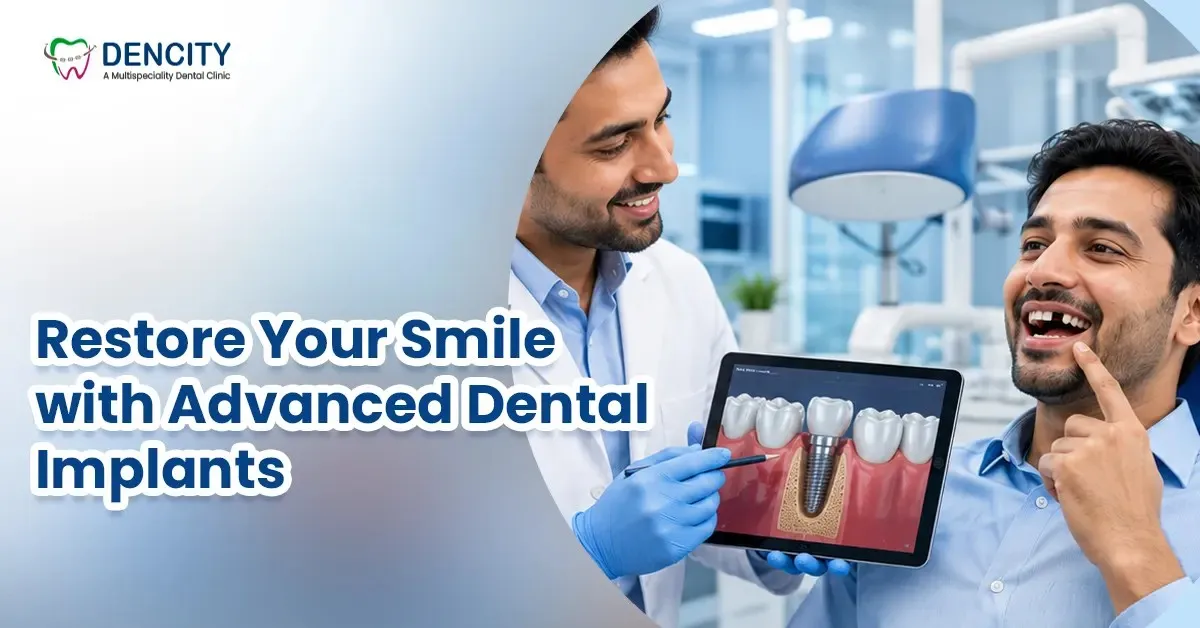
A dental implant is an artificial tooth root, commonly made from titanium, that is surgically placed into the jawbone. Once the implant has integrated with the surrounding bone, it can support a dental crown, bridge or, in some situations, an implant-supported denture.
A typical single-tooth implant restoration has three main components:
- Implant: The portion placed inside the jawbone that acts as an artificial tooth root.
- Abutment: The connector between the implant and the replacement tooth.
- Crown: The visible tooth-shaped restoration designed to restore appearance and function.
How Can Dental Implant Specialist Treatment Replace A Missing Tooth?
Undoubtedly, a missing tooth can affect your ability to chew comfortably, speak clearly and smile with confidence. People also go for other popular tooth-replacement options, such as dentures and dental bridges. But, dental implants are a different way to replace the missing tooth root as well as the visible tooth. The implant is placed into the jawbone and, after healing, can support a custom-made crown. This crown is specifically designed to function and look like a natural tooth.
Below we have listed the major perks of getting a treatment from dental implant specialist for a missing tooth:
Restores Chewing Function
- A dental implant-supported crown provides a stable replacement that can help restore everyday chewing function.
- The implant is anchored in the jawbone and is designed to provide stability during normal use.
- A dental implant dentist will assess your bite and surrounded teeth to ensure the restoration is planned appropriately.
Replacement Without Any Neighbouring Teeth Support
- For a single missing tooth, a dental implant can replace the tooth without requiring the adjacent teeth to be prepared as supports.
- An implant-supported crown is independently supported by the implant.
- A dental implant is placed directly into the jawbone, providing functional stimulation to the surrounding bone.
Provides A Fixed Tooth-Replacement
- An implant-supported crown is designed to remain in place once it has been completed.
- Implants provide a more stable experience when you are eating, speaking and carrying out everyday activities.
- The implant becomes integrated with the jawbone during healing, and the final crown is securely attached to the implant.
Creates A Natural-Looking Smile
- A well-planned implant restoration can be designed to closely match the colour, shape and proportions of your surrounding teeth.
- Considering factors such as tooth position, gum appearance, bite and the final crown, the best dental implant surgeon ensures you a replacement that fits naturally with your existing smile.
Improves Eating And Speaking Stability
- An implant-supported crown is securely attached to the implant, providing a stable replacement rather than a removable tooth.
- This stability can make everyday activities such as eating and speaking more comfortable.
- Dentists from the best dental implant clinic in Bikaner will also evaluate your bite to ensure the replacement tooth functions appropriately with the rest of your teeth.
Helps Maintain Remaining Teeth Alignment
- Replacement through dental implants help restore the space due to a missing tooth.
- It maintains the overall arrangement of your teeth, improving bite and existing dental alignment.
Can Improve Smile Confidence
- A certified dental implant specialist carefully plans implant-supported crowns that restore the appearance of the missing tooth.
- The shape, shade and position of the final crown maintain the aesthetics of patients’ smiles.
- The appropriate planning of the dentist can help patients achieve a natural-looking result.
Long-Term Tooth Replacement Option
- Dental implants are designed to provide a long-term solution for missing teeth.
- The long-term performance depends on factors such as oral hygiene, gum health, implant position, bite forces, lifestyle and regular dental care.
- The best dental implant clinic in Bikaner ensures regular examinations and proper maintenance to protect the implant and surrounding tissues.
What’s The Procedure Of A Dental Implant Treatment?
Dental implant treatment is a carefully planned process, where a dentist replaces your missing tooth with a stable and functional tooth replacement.
The exact treatment sequence and duration varies as it depends on one’s oral health, bone condition, number of missing teeth and whether additional procedures are required. Consulting a qualified dental implant specialist in Bikaner ensures proper assessment of your oral condition and the most-suitable treatment.
Step 1 – Initial Consultation And Dental Examination
The first step is a detailed consultation with your dental implant dentist. During this, your dentist examines the area where the tooth is missing and evaluates your surrounding teeth, gums and bite.
In this step, your dentist will review your dental and relevant medical history to look for the factors that could affect implant treatment or healing. You can discuss your concerns, expectations, previous dental treatments and the different options available for missing tooth replacement.
The dentist will also explain whether a dental implant is appropriate for your situation or whether alternatives such as a bridge or denture should be considered. This initial evaluation provides the foundation for developing a personalised treatment plan.
Step 2 – Diagnostic Evaluation And Planning
Accurate diagnosis is an important part of dental implant treatment. When taking treatment at the best dental implant clinic in Bikaner, your dentist may use conventional dental X-rays and, when clinically appropriate, three-dimensional CBCT imaging to obtain a more detailed view of the proposed implant site.
It helps your dentist evaluate the available jawbone and understand the position of important anatomical structures. This information is particularly useful when planning the implant position and determining whether sufficient bone is available.
After this, based on the examination and imaging, your Dental Implant Specialist will start planning on the basis of implant position, size, angulation and the design of the final tooth restoration. If there is any insufficient bone or another dental concern, the dentist will recommend the best treatment.
Step 3 – Preparation For Implant Placement
Before placing the implant, your dentist needs to ensure that the suggested treatment area and surrounded oral tissues are suitable for the procedure. Existing problems such as active gum disease, infection or other dental conditions may need to be treated first.
Some patients may also require a tooth extraction if a damaged tooth is still present in the targeted implant area. In cases where there is insufficient bone, a bone-grafting or other bone-augmentation procedure may be done.
Note – Not every patient requires these additional procedures. Your Dental Implant Dentist in Bikaner will determine what is necessary based on your examination and diagnostic findings.
Step 4 – Dental Implant Placement
After the above preparation, the implant fixture is surgically placed into the jawbone. The procedure is generally performed after giving the local anaesthesia. Other anaesthesia options may be considered when it seems appropriate.
During implant placement, the dentist positions the implant according to the treatment plan and your anatomy (it varies). The goal is to establish an appropriate foundation for the future replacement tooth and consider both function and appearance.
After the implant is placed, the surgical area is allowed to heal. The patient receives specific post-operative instructions regarding oral hygiene, diet, activity and follow-up care.
Step 5 – Healing And Osseointegration
Following implant placement, the implant needs time to integrate with the surrounding jawbone. This biological process is known as osseointegration and is an important part of implant treatment.
The length of the healing period varies between patients and depends on factors such as bone quality, implant stability, the treatment site and whether additional procedures were performed.
During this stage, your dentist may schedule follow-up appointments to monitor the healing process. It is important to follow the recommended oral-care instructions and attend these appointments so that the implant can be assessed before moving to the restorative stage.
Step 6 – Abutment Placement
Once the implant has healed appropriately and the dentist confirms that it is ready for restoration, the next stage involves connecting the implant to the replacement tooth.
An abutment is the component that connects the dental implant to the final crown. Depending on the treatment approach, the abutment may be placed at the time of implant surgery or during a later appointment. Your Dental Implant Specialist will determine the appropriate approach based on the implant system, treatment site, soft-tissue condition and overall treatment plan.
Step 7 – Custom Dental Crown
The final stage is the placement of the dental crown, which replaces the visible portion of the missing tooth. The crown is custom-made according to the patient's tooth position, bite, surrounding teeth and aesthetic requirements.
The dentist and dental laboratory consider factors such as tooth colour, shape, size and proportions when creating the restoration. The aim is to produce a crown that functions comfortably and blends naturally with the surrounding teeth.
Before completing the treatment, the dentist checks the fit, bite and appearance of the crown and makes any necessary adjustments.
Step 8 – Follow-Up And Long-Term Maintenance
Dental implant treatment does not end once the crown has been fitted. Regular dental check-ups and good oral hygiene are important for maintaining the health of the tissues around the implant.
Your dentist can guide you on brushing, interdental cleaning and other methods of caring for the implant-supported restoration. Regular professional examinations can also help detect potential problems around the implant at an early stage.
With appropriate care and maintenance, a dental implant can serve as a long-term tooth-replacement option for many patients.
Why To Visit A Dental Implant Dentist In Bikaner?
Choosing the right Dental Implant Dentist in Bikaner is an important step when you are planning to replace a missing tooth. Dental implants involve careful evaluation, precise treatment planning and proper follow-up to achieve a functional and natural-looking result. A dental implant specialist ensures:
Evaluation Of Your Overall Health
Visiting the best dental implant clinic in Bikaner ensures you the treatment from a specialist who evaluates your oral and overall health before recommending a specific treatment. They check your gums, jawbone, existing teeth and medical history for factors that may affect healing.
This evaluation helps determine whether dental implants are suitable for you. It also allows potential risks or concerns to be addressed before treatment begins.
Personalised Treatment Plan
Every case of missing-tooth is different, so implant treatment should be planned according to individual needs. Your dentist considers the number and location of missing teeth, bone condition and bite.
A personalised plan outlines the appropriate implant and restoration options for your case. This helps create a treatment approach focused on both function and appearance.
Using Appropriate Diagnostic Imaging
Proper diagnosis is an important part of a successful implant treatment. Depending on your case, your dental implant dentist may recommend dental X-rays or 3D CBCT imaging. These images help assess available bone and identify important anatomical structures.
The reported information supports accurate planning of implant placement and restoration.
Addressing Major Dental Problems
Existing dental problems may need to be treated before an implant is placed. Your dentist can identify issues such as gum disease, infection, damaged teeth or inadequate bone support.
Treating these concerns can create healthier conditions for implant treatment. It also helps develop a more comprehensive plan for your overall oral health.
Guidance Throughout The Complete Process
The best dental implant surgeon in Bikaner guides you throughout the process, right from initial stages, consultation and planning to placement, ensuring proper healing and crown restoration. An experienced dentist will monitor you through each stage and explain what to expect.
Also, you can also discuss recovery, oral care and any concerns that arise during treatment. Their continuous guidance can make the treatment process clearer and more comfortable.
Focus On Long-Term Maintenance
Even the best dental implant in Bikaner requires regular care even after the final crown has been placed. Your dentist can guide you on brushing, interdental cleaning and professional dental check-ups. For a good reason, regular monitoring helps identify potential problems around the implant at an early stage.
It’s always suggested to ensure good maintenance and oral hygiene that can support the long-term health and function of your implant.
What Is The Cost Of The Best Dental Implant Clinic In Bikaner?
The cost of a dental implant in Bikaner can vary from patient to patient. The final price/fee depends on the condition of your oral health, the type of implant restoration required, and whether any additional procedures are needed before treatment.
Here are the prime factors that decide the overall cost of the best dental implant clinic in Bikaner:
- Number Of Missing Teeth
Replacing one missing tooth generally costs different than replacing several teeth. The number and area of missing teeth can impact the number of implants and restorations required.
- Brand Of Implant System
Dental implants are available from different manufacturers and in different designs and materials. The implant system determined by your Dental Implant Dentist can affect the overall treatment cost.
- Type Of Crown You Select
The final crown is the visible part of the implant restoration and can be made using different materials. The material, design and laboratory work involved can influence the total cost.
- Diagnostic Imaging
Dental X-rays and CBCT scans (when clinically required) may be used to evaluate the jawbone and plan implant placement. The type and extent of diagnostic imaging required can add to the overall treatment expense.
- Bone Grafting Or Other Preparatory Procedures
Some patients may not have sufficient bone at the proposed implant site and may require bone grafting or another preparatory procedure. Additional treatments can increase both the overall cost and treatment timeline.
- Complexity Of The Case
Straightforward single-tooth implant cases may require fewer treatment steps than complex cases. Factors such as bone condition, gum health, tooth position and existing dental problems can affect the complexity and cost.
- Surgical And Restorative Requirements
Dental implant treatment includes both the surgical placement of the implant and the restoration that replaces the missing tooth. The procedures, appointments, components and laboratory work required for your individual case can influence the final fee.
How Long Does A Dental Implant Take?
We understand that patients are concerned about how long the complete treatment will take. Well, there is no single timeline that applies to every patient because dental implant treatment is planned according to the condition of the missing tooth area, jawbone, gums and overall oral health.
For some patients, a single-tooth implant may involve fewer treatment stages. Others may need further procedures such as tooth extraction, bone grafting or gum disease treatment before the implant can be placed.
Your dental implant specialist in Bikaner will evaluate these factors and explain the expected treatment sequence during your consultation.
The treatment begins with a dental examination and appropriate diagnostic imaging. Your dentist evaluates the missing tooth area, surrounding teeth, gums, jawbone and bite before preparing the implant treatment plan.
This stage may take one or more appointments depending on the complexity of your case and the diagnostic information required. If the damaged or non-restorable tooth is still present, it may need to be removed before or as part of the implant treatment. In selected cases, an implant may be placed at the time of extraction, while other cases require a healing period before implant placement.
Your Dental Implant Dentist will determine the appropriate timing based on factors such as infection, bone condition, gum health and implant stability.
- Bone Availability
Good bone condition can make implant placement more simple. But, any significant bone loss may require additional treatment.
- Gum Health
Existing gum disease may need to be treated before implant placement.
- Tooth Extraction
The timing of implant placement may depend on the condition of the tooth being removed.
- Bone Grafting
Patients requiring bone augmentation may need additional healing time.
- Implant Stability
Your dentist will determine when the implant is sufficiently stable for the restorative stage.
- Number Of Implants
Replacing multiple teeth can involve a more complex treatment plan than replacing one tooth.
- Individual Healing
Every patient's healing response is different and can influence the treatment schedule.
- Type Of Restoration
The final crown, bridge or implant-supported denture can affect the number of restorative appointments.
Is Dental Implant Treatment For Missing Tooth Painful?
Dental implant placement is performed under appropriate anaesthesia, so patients generally should not feel pain during the surgical procedure. Once the impact of anaesthesia starts wearing off, some patients may experience temporary tenderness, swelling or discomfort around the treatment area.
These symptoms are generally part of the normal healing process following oral surgery and usually improve with time.
Below, we have discussed the different anaesthesia scenarios during treatment:
During The Implant Procedure
Before implant placement, your dentist uses appropriate local anaesthesia to numb the treatment area. This helps make the surgical procedure comfortable for the patient. If additional anaesthesia or sedation is clinically appropriate, your Dental Implant Dentist can discuss the available options with you before treatment.
After Dental Implant Placement
Some degree of swelling, tenderness or mild discomfort can occur after implant surgery. The intensity and duration can vary depending on the number of implants, surgical complexity and individual healing response.
How To Manage Discomfort During Dental Implant Treatment?
- Your dentist will provide post-operative instructions and may recommend appropriate medication that you need to carefully follow.
- Regular maintenance and supervision from the dental implant specialist can support a smooth recovery.
- The experience varies between patients and depends on the complexity of the procedure, so consult your dentist accordingly.
- Your Dental Implant Dentist can explain what you are likely to experience based on your specific procedure, including whether extraction, bone grafting or implant placement will be performed during the same treatment plan.
Choosing The Right Dental Implant Dentist In Bikaner
Replacing a missing tooth can help restore comfortable chewing, speech and confidence. Choosing an experienced Dental Implant Specialist in Bikaner can help ensure your treatment is carefully assessed, planned and personalised to your needs.
If you are looking for the best dental implant clinic in Bikaner, book your consultation at Dencity to understand the most-suitable treatment options, expected timeline and costs.
Recent Posts
05 Oct 2026
30 Sep 2026
30 Sep 2026
Frequently Asked Questions
Most healthy adults having missing teeth are good candidates for dental implants. A Dental Implant Specialist will evaluate your jawbone, gums, and also entirety of oral health to determine your eligibility.
Dental implant treatment typically takes around 3–6 months, all of which is totally depending on healing and whether bone grafting is needed. The timeline allows the implant to fuse securely with the jawbone.
The procedure is done under local anesthesia, so most of the patients feel little to no pain during surgery. Mild soreness afterward is common and usually manageable with prescribed medication.
If deep oral hygiene and regular dental checkups is something that is followed, the dental implants can last up to 20 years or more, and often a lifetime. The crown may need replacement after many years due to normal wear.
A Dental Implant Specialist is known to have advanced training in implant placement and even more complex cases. Their expertise helps in making sure that the treatment is done with precise planning, higher success rates, and long term results.