
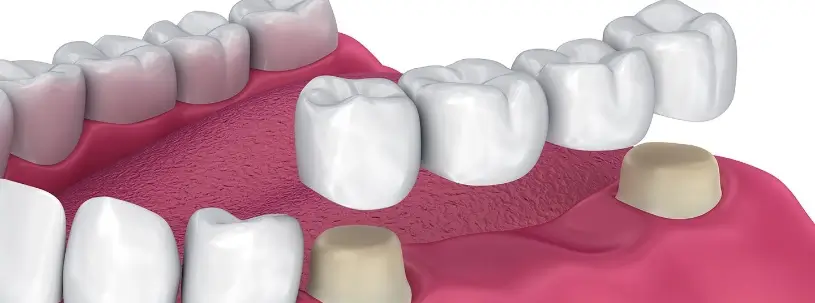
Tooth Or Dental Bridge Treatment In Bikaner
Missing teeth is one thing that can affect much more than just appearance. Everyday activities like chewing, speaking, and maintaining proper bite balance may gradually become difficult when a gap is left untreated.
But no worries, at Dencity, Dental bridge treatment is designed to restore function, support surrounding teeth, and rebuild a natural-looking smile with customized replacement teeth that blend comfortably with existing dentition. You get the treatment of restoration planned with attention to fit, comfort, aesthetics, and long term oral stability.
Why Replacing Missing Teeth Is Important?
A missing tooth may seem like a small problem initially, but with time that empty space can influence the overall balance of the mouth. Nearby teeth often begin shifting toward the gap, which may affect alignment and create uneven pressure while chewing.
In some cases, this imbalance can contribute to jaw discomfort, difficulty maintaining oral hygiene, or excessive wear on surrounding teeth.
- Speech clarity can change depending on the location of the missing tooth, especially when the gap involves visible or functional areas near the front of the mouth.
- Replacing that missing structure at the right time helps in the maintenance for better support of daily oral function and appearance.
- Beyond function, tooth loss may gradually affect facial structure. A professionally planned missing tooth replacement helps preserve smile symmetry and improves overall comfort during eating and conversation.
- Restoration of bridges is performed following an analysis of the health of the gums, the strength of surrounding teeth, and the overall bite alignment.
Quick Note: Delaying replacement of a missing tooth for a long period may increase stress on nearby teeth and make future restorative procedures more complex than necessary.
Understanding How Does A Dental Bridge Works
A dental bridge is a custom made restoration designed to replace one or more missing teeth by using the support of nearby teeth or implants.
- The artificial replacement tooth, often called a prosthetic tooth, is positioned in the empty space and secured for stability and daily function.
- Usually supporting teeth on either side of the gap are carefully prepared to hold protective crowns that anchor the bridge in position.
- This creates a durable fixed dental restoration that helps restore chewing efficiency, speech clarity, and smile balance without leaving visible spaces between teeth.
- For visible areas of the smile, special attention is given to shape, shade, and proportions so the restoration blends naturally with surrounding teeth.
- A well designed front dental bridge can restore confidence while maintaining a natural appearance during speaking and smiling.
- When the missing tooth is located in the front region, planning becomes even more detailed because aesthetics and bite pressure both play an important role.
- An anterior dental bridge is usually designed with precise contouring to support facial harmony while maintaining comfort during everyday use.
The final design depends on factors such as the number of missing teeth, gum health, surrounding support, and bite condition.
What Are Different Types Of Dental Bridges Used?
At Dencity, dental bridges are not designed in a one-size-fits-all manner. The structure, support system, and material selection can vary depending on the location of the missing tooth, bite force, and long-term functional requirements.
1. Traditional Dental Bridge
This is among the most popular methods of tooth replacement. This usually involves an artificial tooth that is held in place using crowns attached to the natural teeth near it. The procedure is commonly applied for the restoration of proper chewing and spacing of the dental arch.
2. Cantilever Dental Bridge
A cantilever dental bridge is generally opted when support is available only on one side of the missing tooth space. This design comes in handy in areas where biting pressure remains relatively low, especially in selected front regions of the mouth.
3. Maryland Bridge
The Maryland bridge utilizes a type of support system which is quite conservative in situations where there are metallic or ceramic crowns attached to the opposite side of adjacent teeth. Due to the minimal preparation involved, this is an option which can preserve teeth structures effectively.
It is often chosen for younger individuals or for replacing smaller visible teeth.
4. Removable Dental Bridge
The removable dental bridge as the name suggests is removable for cleaning purposes. Though it lacks the stability of the other types of bridges, it is still a useful type to use depending on the circumstances, especially where more than one tooth is lost.
5. Temporary Dental Bridge
A temporary dental bridge is normally employed as part of the treatment process before the actual bridge installation occurs. The purpose of the provisional or temporary bridge is to help protect the teeth, maintain a good appearance, and function normally as well.
6. Permanent Front Tooth Dental Bridge
The permanent front tooth dental bridge is specially engineered to cater for those parts of the mouth where aesthetics matter much more than other considerations. It ensures that the bridge is well matched with the neighboring teeth in terms of color, shape, and translucency.
Because front teeth contribute heavily to speech and facial aesthetics, precision in design and placement becomes especially important.
Did You Know?
Modern bridge planning often includes digital shade analysis and bite evaluation techniques that help create more natural-looking teeth replacement results with improved comfort and long-term stability.
What Are The Materials Used For Dental Bridges?
The durability and appearance of a bridge depend greatly on the material used during fabrication. Modern restorative dentistry offers several options that balance strength, comfort, and aesthetics based on the location of the missing tooth and daily bite pressure.
- A zirconia dental bridge is largely preferred because of its combination of toughness and natural appearance. Zirconia itself is known for its strength and tooth-like finish, making it suitable for both visible and pressure-bearing areas of the mouth.
- In certain situations, a metal dental bridge may still be recommended because of its structural reliability and resistance to fracture under heavy chewing forces.
- Porcelain and ceramic restoration options are frequently selected for visible teeth because they can closely resemble natural enamel in color and translucency.
The choice of material is often decided by criteria such as the health of the bite, the level of support of the adjoining teeth, cosmetic considerations, and even overall oral health care goals. Additionally, current dental labs have the ability to digitally design bridges that mimic the texture and color of adjoining teeth.
Step-by-Step Process Of Dental Bridge Treatment
When looking for a dental bridge treatment near you, at Dencity you get the treatment process carefully planned to create a restoration that feels stable, comfortable, and natural during everyday use.
Step 1: Initial Examination And Digital Assessment
The first visit involves oral exam, dental X-rays and scans, as well as analysis of the area where the missing tooth was. It will reveal whether adjacent teeth can serve as supports for the dental bridge.
Step 2: Tooth Preparation
The supporting teeth are then gently reshaped to create space for the crowns that will be anchoring the bridge. Exact measurements are then taken to make sure the final restoration fits accurately without having any effect surrounding teeth or gum tissue.
Step 3: Shade Matching And Design Planning
A personalized bridge would follow the shade matching of the teeth, face proportionality, and proper bite formation. Proper shading would ensure that the tooth looks natural without looking out-of-place due to being too bright.
Step 4: Placement Of A Temporary Restoration
Mostly, first a temporary dental bridge is placed while the fabrication of the final restoration is being completed. This temporary thing helps maintain appearance and protects the prepared teeth during the waiting period.
Step 5: Final Bridge Placement
When the bridge is completed, fit, comfort, and occlusion of the bridge are checked before its permanent installation. Any needed fine-tuning can be performed at this stage.
Quick Note: Maintaining proper oral hygiene around the bridge area is important for preserving gum health and improving the long-term success of the restoration.
Dental Bridge vs Dental Implant
People normally do get confused between bridges and implants. Both are used to replace missing teeth, but it is the treatment approach, healing time, and structural support that is different. The right option usually depends on oral condition, surrounding teeth support, bone health, and long-term functional goals.
| Feature | Dental Bridge | Dental Implant |
|---|---|---|
| Procedure Duration | Usually completed in fewer visits | Requires a longer treatment timeline |
| Surgical Procedure | Generally not required | Involves implant placement surgery |
| Support System | Supported by nearby teeth | Supported by jawbone |
| Recovery Period | Comparatively shorter | Healing phase may take several months |
| Cost Range | Often more economical initially | Usually higher due to surgical stages |
| Suitable For | Areas with healthy adjacent teeth | Areas with adequate bone support |
A bridge might be recommended when neighboring teeth already require crowns or when a quicker restorative option is needed. Implants, on the other hand, are known to function independently and do not rely on adjacent teeth for any kind of support.
Why Dencity Is The Premier Choice For Dental Bridge Treatment In Bikaner?
Restoring missing teeth requires more than simply filling an empty space. Proper planning, accurate fit, and natural aesthetics all contribute to the long-term comfort of a bridge restoration. At Dencity, each case is approached with attention to function, facial balance, and everyday usability.
Advanced diagnostic evaluation, digital treatment planning, and carefully selected restorative materials, for people seeking dental bridge treatment in Bikaner, here you get everything.
Dr. Ajay Singh Rajpurohit brings extensive expertise in orthodontics and dentofacial alignment, while Dr. Divya Rajpurohit contributes a preventive and patient-focused perspective that supports long-term oral health maintenance.
The focus remains on creating restorations that are functional, durable, and aesthetically balanced rather than overly artificial or bulky in appearance. Book your consultation now!