
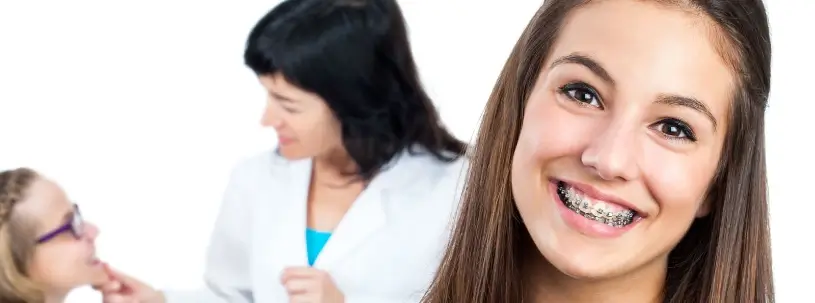
Best Orthodontist Near You In Bikaner
Misaligned teeth and jaw irregularities are more than a cosmetic concern, they affect how you chew, speak, and maintain oral hygiene. At Dencity, our best orthodontist in Bikaner combines clinical precision with years of specialised training to deliver lasting, functional results. Whether the concern is crooked teeth, spacing issues, or a bite that simply doesn't sit right, orthodontic treatment in Bikaner is available here for every stage of life.
Who Is An Orthodontist And What Do They Treat?
Orthodontist is a defined specialisation within dentistry, one that focuses on correcting the alignment of teeth and the structural relationship between the upper and lower jaws. It is not simply about aesthetics. Crooked or crowded teeth are tougher to clean thoroughly, making them more prone to decay and gum disease over time.
A misaligned bite can also place uneven stress on the jaw joints, occasionally leading to headaches, TMJ discomfort, or difficulty chewing.
An orthodontic specialist, formally trained in both orthodontics and dentofacial orthopedics, is equipped to assess the full picture: tooth position, jaw development, facial balance, and long-term bite function.
This goes well beyond what a general dentist evaluates in a routine dental health checkup. At Dencity, the best orthodontic clinic near you, this level of specialisation is led by a senior orthodontist in Bikaner with an M.D.S. in Orthodontics and Dentofacial Orthopedics, a qualification that represents an additional three years of postgraduate training after dental school.
Signs That Indicate You Need An Orthodontic Evaluation
Many people delay looking for an assessment because the issue to them never feels "severe enough." Although, in reality, early identification almost always leads to simpler, shorter treatment. These are the most common indicators that a consultation would be worthwhile for both children and adults.
- Crowded Or Overlapping Teeth: Teeth that have no room to sit straight, often a sign of jaw to tooth size discrepancy.
- Gaps Between Teeth: Spacing issues that affect bite, speech, or overall alignment.
- Overbite Or Under-Bite: Malocclusion treatment is for the cases where upper and lower teeth don't close correctly.
- Jaw Clicking Or Discomfort: TMJ strain often linked to bite imbalance, worth assessing early.
- Mouth Breathing Or Speech Difficulty: Often related to structural jaw issues that respond better to orthodontic management.
- Difficulty Cleaning Certain Teeth: Crowded teeth are constantly harder to floss, increasing the chances of long term cavity risk.
If you've been searching for a best orthodontist near you after noticing any of the above, an in-person assessment is the only reliable next step. Radiographs and bite analysis together tell a far clearer story than a photograph ever could.
Clinical Note: Malocclusion, the clinical term for bite misalignment, is one of the most common dental conditions worldwide. Not all malocclusion requires immediate treatment, but all of it benefits from early evaluation so the right timing can be determined.
Orthodontic Braces Treatment That Are Available: Fixed, Removable, And Surgical
The type of treatment recommended depends on the nature and severity of the alignment issue, as well as the individual's age and dental development. A thorough assessment including X-rays, impressions, and clinical photographs forms the basis of any personalised plan.
- Fixed Braces: Orthodontic braces treatment remains the most widely used approach for moderate to complex cases. Metal or ceramic brackets are first fixed to the teeth, arch wires then apply equal pressure that timely shifts the position of the tooth. Fixed braces run continuously, with no removal required, which makes them particularly effective for cases involving significant rotation or spacing.
- Also falling under this category are palatal expanders, which widen the upper jaw to accommodate crowded teeth, most effective when used during childhood or early adolescence.
- Removable Braces And Aligners: For milder to moderate cases, invisible aligners Bikaner residents can now access offer a discreet alternative. These custom-fabricated braces are changed every few weeks and can address tooth rotation, spacing, and mild bite discrepancies without brackets or wires. Orthodontic retainer use follows any active treatment phase, fixed or removable to hold corrected positions as bone and soft tissue adapt.
In a certain number of cases involving significant jaw discrepancy that cannot be resolved through braces alone, orthodontic surgery (orthognathic surgery) becomes part of the plan. This is typically considered for adults with skeletal malocclusion, where the jaws themselves are disproportionate in size or position.
Pre-surgical orthodontic preparation is carried out first, followed by the surgical correction, and post-surgical orthodontic finishing thereafter. This combined approach is managed in coordination with a maxillofacial surgeon.
When looking for an orthodontist near you for braces, whether metal, ceramic, or lingual, at Dencity you will find all fixed options assessed and recommended based on clinical suitability, not preference alone.
Phases Of Orthodontic Braces Treatment
From initial consultation through to the retention phase, orthodontic braces treatment follows a structured clinical pathway. Here's what that typically looks like at Dencity:
- Consultation: The first step is always an early assessment that includes dental X-rays, bite checks, and required photographs.
- Diagnosis: This step is where the treatment plan is laid out in accordance with whatever was discovered during the consultation process.
- Active Treatment: The treatment begins with utmost care and perfection by our experienced orthodontic specialists.
- Progress Review: Another very important step is to keep a check over how and what progress is being made after the treatment is completed.
- Retention: Finally the retainers are fitted at close.
Important: Total treatment duration is subject to the case complexity, starting from as few as 6 months for minor corrections, it can go up to 18–24 months for comprehensive realignment. Duration estimates are given after your initial clinical assessment, not before.
Why Having An Early Orthodontic Treatment Makes A Difference?
The Indian Orthodontic Society recommends that children receive their first orthodontic screening by age 7. At this stage, enough permanent teeth have usually erupted to identify developing problems, even if treatment itself isn't yet needed. The benefit of catching issues early is that jaw growth can still be guided, reducing the complexity of later intervention.
Early orthodontic treatment is not just about having braces on a seven-year-old. It is more about identifying issues related with jaw width, severe crowding, or habits like thumb sucking that are actively shaping jaw development, and then intervening before bone growth closes off certain options.
Phase one treatment in childhood is often shorter and less complex precisely because growth is still on your side.
For children orthodontic treatment in Bikaner, Dencity offers a dedicated paediatric approach with Dr. Divya Rajpurohit (M.D.S. Pedodontics and Preventive Dentistry) and Dr. Ajay Singh Rajpurohit (M.D.S. Orthodontics) working together as the clinical team.
The familiarity children build with the clinic environment during early visits also makes any subsequent treatment phase significantly less stressful for them.
How Effective Is Orthodontic Treatment For Adults?
There is no upper age limit known for having an Orthodontic treatment. Adults contribute to a growing share of orthodontic cases worldwide and the functional outcomes are just as reliable as those achieved in adolescence, though treatment timelines can sometimes run slightly longer due to denser bone structure.
Reasons adults pursue treatment vary widely, some missed treatment during childhood, others are seeing bite-related wear patterns emerge over time, and many simply feel more motivated now than they did earlier.
Adult orthodontic treatment in Bikaner at Dencity is built around adult schedules and concerns, including discreet options like aligners or ceramic brackets for those where visibility is a priority. Widely considered the best orthodontist in Bikaner for braces.
The best adult orthodontic treatment in Bikaner is one that accounts for the complete oral health picture, starting from existing restorations, gum health, bone levels, and not just the alignment alone. Every adult case at Dencity begins with a full oral health review before any orthodontic plan is finalised.
Clinical Comparison Between Braces And Aligners
Both approaches work. Which one is appropriate depends on case complexity and compliance. Here's a straightforward breakdown:
| Factor | Metal/Ceramic Braces | Clear Aligners |
|---|---|---|
| Visibility | Visible (ceramic = less so) | Nearly invisible |
| Suitable for complex cases | Yes | Mild to moderate only |
| Removable during eating | No | Yes |
| Compliance dependent outcome | Less so, fixed in place | Highly, must be worn 20–22 hrs/day |
| Emergency appointments | Occasional (wire poking, bracket) | Rare |
| Retainer required after | Always | Always |
Book Appointment With The Best Orthodontist In Bikaner Today!
Alignment issues rarely improve on their own, and when left unaddressed, they tend to worsen gradually and quietly. The sooner a qualified specialist looks, the more options remain on the table.
Whether it's your child's first orthodontic screening or a bite concern you've been putting off for years, Dencity's orthodontic team in Bikaner is ready to give you a clear, honest picture of where things stand and what it takes to fix them.
So book yourself an appointment at Dencity today, the best orthodontic clinic in Bikaner for its dual-specialist structure, a rare combination where both orthodontic and paediatric dental care are delivered under the same roof by qualified M.D.S. degree holders.